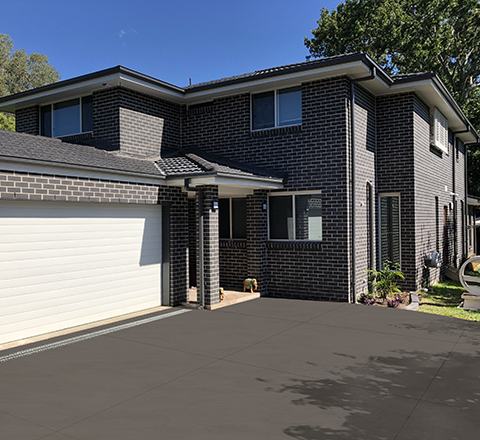
Driveway construction on a rural property in the Southern Highlands NSW

If you're on a rural block in NSW, your driveway situation looks nothing like a suburban one. You're not talking about a neat 10-metre strip from the street to a double garage. You're talking about 80, 120, sometimes 200-plus metres of access road cutting across paddocks, through clay, down slopes, and over drainage lines. The decision between gravel and concrete hits completely differently at that scale.

We build driveways in Southern Highlands regularly, and the gravel vs concrete debate comes up on almost every rural job. The honest answer is that neither material wins outright, it depends on your property's length, gradient, soil, budget, and how much ongoing maintenance you're prepared to do. This guide gives you the straight answer on all of it.

Why Are Rural Driveways Different?

Rural driveways are a different build category from suburban ones. Scale is the obvious factor, but it's not the only one. Here's why the comparison matters.
  • Length changes the economics entirely. A 10m concrete driveway costs a few thousand dollars. A 200m concrete driveway can run into six figures. The cost-per-metre conversation is unavoidable on rural properties.
  • Vehicle load is heavier. Farm properties see delivery trucks, water carriers, excavators, and stock transport, not just passenger cars. The sub-base needs to be built for that load regardless of what surface you choose.
  • Gradient and drainage are bigger challenges. Rural properties have more topographic variation. A driveway that runs across a natural drainage path without proper culverts or table drains will fail, regardless of whether it's gravel or concrete.
  • Soil movement is more pronounced. The clay-heavy soils common across the Southern Highlands expand and contract seasonally with moisture. Any surface laid on an inadequate base will show it within a few years.
For driveways in Southern Highlands, understanding your specific site is always the starting point. Slope, soil type, seasonal drainage, and expected traffic are the four questions that shape every recommendation we make.

What Are the Pros and Cons of Gravel Driveways on Rural Properties?

Gravel has been the go-to surface for rural access roads in NSW for generations, and for good reason. It's practical, affordable, and it works with the natural drainage of a rural block rather than fighting it. But it's not maintenance-free.

Pros

  • Significantly lower upfront cost at $40–$80 per m²
  • Naturally permeable, water drains through rather than pooling
  • Easy to repair, damaged sections can be regraded or topped up quickly
  • Works well on gentle to moderate slopes with correct drainage design
  • Accessible for large vehicles immediately after installation
  • No curing time or wait period
  • Can be extended or widened cheaply as property needs change

Cons

  • Requires periodic top-ups every 3–5 years
  • Surface loss is accelerated by heavy vehicles and steep grades
  • Can become muddy or rutted in extended wet conditions
  • Gravel displacement near road entry requires regular clearing
  • Dust in dry seasons on exposed rural properties
  • Less visually polished near the home entrance
The key to a long-lasting gravel driveway isn't the gravel itself, it's the base underneath and the drainage design alongside it. A gravel surface laid directly on soft clay without proper compaction and cross-drainage will fail within a couple of wet seasons.

What Types of Gravel Work Best for Long Rural Driveways?

Not all gravel is equal on a rural driveway. The material choice matters a great deal for stability under load.
  • Crushed rock (road base): The most reliable choice for rural driveways in NSW. Angular particles interlock under compaction, creating a stable, load-bearing surface. This is what local councils use on rural roads, and for good reason.
  • Crushed granite: Similar properties to road base, with good compaction and drainage. Widely available in the Southern Highlands and surrounding regions.
  • 20mm or 40mm blue metal: Good drainage but tends to shift under heavy vehicle loads. Works better as a top layer over a road base foundation than as a standalone surface.
  • River gravel (rounded): Avoid for long rural driveways. Rounded stones don't interlock, they migrate to the edges under traffic, and heavy vehicles can cut through the surface quickly.
A well-specified rural gravel driveway uses a compacted clay or subgrade layer at the bottom, then a 100–150mm road base layer, then a top course of angular crushed rock or blue metal. That layered approach is what gives you a surface that holds up to farm vehicles for years without constant remediation.

What Are the Pros and Cons of Concrete Driveways on Rural Properties?

Concrete is the premium choice for residential driveways, and it earns that reputation, when it's used in the right context. On a rural property, that context matters a great deal. Concrete construction in Southern Highlands delivers a hard, permanent surface that requires minimal ongoing maintenance, but the economics change significantly when you're working at rural scale.

Pros

  • Lifespan of 25–40 years with proper installation and sealing
  • Very low maintenance once cured, no top-ups or regrading
  • Professional, polished appearance near the home entrance
  • Handles heavy vehicle loads well with correct reinforcement
  • No dust or surface displacement issues
  • Can be finished in exposed aggregate or coloured concrete for aesthetics

Cons

  • High upfront cost at $65–$150+ per m² for plain concrete
  • At 200m x 4m, a full pour can cost $50,000–$120,000+
  • Cracks on clay soil if sub-base and drainage aren't managed properly
  • Repairs are more complex and visually obvious than gravel patch repairs
  • Requires 3–7 days curing before vehicle access
  • Expansion joints needed at regular intervals in NSW's temperature range

Is Concrete Practical on Long or Sloped Rural Driveways?

On steep slopes, concrete can present traction issues when the surface is wet. A plain concrete finish on a 1:8 or steeper gradient will become slippery in the wet conditions common to the Southern Highlands winter and spring. An exposed aggregate finish improves grip significantly and is worth the additional cost if your driveway has any meaningful grade.

On long driveways, the practical compromise most rural property owners land on is a concrete section for the first 20–40 metres from the road and near any sheds or hardstands, with a gravel surface for the remainder. This gives you the low-maintenance finish where it's most visible and most used, without the prohibitive cost of concreting an entire rural access track.

The bottom line on driveways construction in Southern Highlands is that concrete and gravel aren't actually competing options for most rural properties. They're complementary materials used in different zones of the same project.

Gravel vs Concrete: What Does It Cost on NSW Rural Properties?

Cost is where the gravel vs concrete driveway decision becomes clearest. The difference in upfront spend is significant at rural scale, and it's the number that drives most property owners toward a gravel-first approach for long access tracks.

Installation Cost per Square Metre

Surface Type Cost per m² (NSW, 2026) Example: 200m x 4m Driveway Lifespan
Compacted gravel / road base $40–$80 $32,000–$64,000 5–10 years before top-up needed
Plain concrete $65–$150 $52,000–$120,000 25–40 years
Exposed aggregate concrete $100–$180+ $80,000–$144,000+ 25–40 years
Concrete entry + gravel run (hybrid) Varies by ratio $45,000–$85,000 (est.) Mixed, based on sections

Cost estimates based on published NSW 2026 market rates from industry sources. Rural site costs, access, excavation, and drainage add to these figures. Get a site-specific quote for accurate pricing.

Long-Term Maintenance Costs

The upfront comparison alone doesn't tell the full story. Gravel driveways require ongoing investment that concrete doesn't. A realistic cost model over 20 years looks like this:
  • Gravel: Plan for a top-up or regrade every 3–5 years. On a 200m driveway, each maintenance event might cost $5,000–$15,000 depending on the extent of work needed. Over 20 years, add $15,000–$45,000 in maintenance to the original install cost.
  • Concrete: Minimal maintenance if properly installed. Sealing every 8–10 years and joint inspection keeps it in good shape. A crack repair is more costly per event but should be infrequent on a well-prepared base. Ongoing cost over 20 years is comparatively low.
When you run the total-cost calculation over 20 years, the gap between gravel and concrete narrows, but gravel still tends to come out cheaper on very long rural driveways, primarily because the installation cost difference is so large at rural scale.

Which Handles NSW Weather and Terrain Better?

The Southern Highlands sits at higher elevation than coastal NSW and receives significantly more rainfall annually. Bowral, Moss Vale, and Robertson see regular heavy rain, cool winters with frost, and seasonal soil movement that suburban contractors don't always account for. Both driveway materials respond differently to these conditions.

Concrete holds its surface in wet conditions without losing material. It won't rut or develop grooves from repeated vehicle passes through wet periods. However, if the drainage isn't managed correctly, water ponding on or alongside the driveway can undermine the base and lead to cracking, especially on the reactive clay soils common to the Highlands.

Gravel is permeable by nature, which gives it an advantage in areas with high rainfall, water drains through and away rather than pooling on the surface. The challenge is that sustained heavy traffic in wet conditions can churn the surface and accelerate material loss. This is where proper drainage design, correct gravel specification, and a solid compacted base make the difference.

Drainage and Stormwater Considerations

Drainage is the single most important factor in rural driveway longevity, regardless of whether you choose gravel or concrete. A driveway laid across a natural drainage path without culverts or table drains will fail prematurely, full stop.
  • Table drains: Shallow channels alongside the driveway that intercept and redirect surface runoff. Essential on any driveway with a slope.
  • Culverts: Where the driveway crosses a natural water flow, a properly sized culvert lets water pass through without undermining the road base. Undersized culverts are a common cause of rural driveway failure after heavy rain.
  • Cross drainage: On long gravel driveways, periodic cross-drain structures redirect accumulated water off the surface before it can channel and erode the road base.
  • Drainage falls on concrete: Concrete driveways need a slight cross-fall (typically 1–2%) to direct water off the surface. Without it, water sits on the slab and can work into any cracks or construction joints.
In bushfire-prone zones, which cover significant parts of the Southern Highlands, driveway width and turning areas also need to meet RFS requirements for emergency access. Factor this into your planning before setting a driveway width.

So, Which Driveway Should You Choose for Your Rural NSW Property?

The right answer for most rural properties in NSW is not a straight choice between gravel and concrete, it's knowing where each material makes sense on your specific block.<.p>

If your driveway is under 40 metres and near the house, concrete is worth the investment. If it's over 80 metres and through open paddock or bush, gravel is almost always the smarter financial call, with concrete reserved for the entry point and any hardstand areas.
Here's a practical decision guide based on what we see on rural properties across the Southern Highlands:
Situation Recommended Approach
Short driveway under 40m, near the house Concrete: low-maintenance, great appearance, cost is manageable
Long driveway 80m+ through paddock or bush Compacted gravel: practical, cost-effective, easier to repair
Sloped driveway with a gradient over 1:10 Concrete with exposed aggregate finish for traction, or sealed gravel with proper drainage works
Mixed use: residential entry plus farm track Concrete near the house (first 20–30m), gravel for the farm track
Heavy vehicle use (trucks, machinery) Reinforced concrete or heavy-spec road base gravel with deep compacted sub-base
Tight budget, fast turnaround needed Gravel: lower cost, no curing time, accessible immediately
Crushed angular gravel road base — the preferred surface material for long rural driveways in NSW
Crushed angular road base gravel: the go-to surface for long rural driveways across the Southern Highlands and Illawarra.

Whatever you choose, the non-negotiable on any rural driveway in NSW is proper site preparation. The best gravel surface fails on a poor base. The best concrete slab cracks on inadequately drained clay. Get the sub-base and drainage design right, and either material will serve you well for years.

At Buildaroo, we've been building retaining walls and driveways in the Southern Highlands for over 20 years. Our licensed builders manage every project personally, from the first site visit through to the final inspection. We know how this terrain behaves, how the clay moves through the seasons, and how to build access roads that hold up through Southern Highlands winters and wet springs alike.

Frequently Asked Questions

1Is gravel or concrete cheaper for a long rural driveway in NSW?
Gravel costs $40–$80 per m² installed versus $65–$150 per m² for plain concrete, making it the significantly cheaper upfront choice for long rural driveways in NSW. Gravel does need a top-up every 3–5 years, so the 20-year cost gap narrows, but gravel still wins on total spend for driveways over 100m.
2How does the Southern Highlands climate affect driveway material choice?
The Southern Highlands gets more rainfall than coastal NSW, with cool winters, frost, and clay-heavy soils that stay wet long after rain stops, putting gravel driveways at risk of rutting without proper grading and drainage. Concrete holds its surface better in persistent wet conditions but needs a well-prepared sub-base to resist cracking as clay soils expand and contract through the seasons.
3What type of gravel works best on rural driveways in the Southern Highlands?
Crushed rock (road base) or crushed granite are the best options for rural driveways in the Southern Highlands, their angular particles interlock under compaction to create a stable, load-bearing surface that resists spreading. Avoid rounded river gravel or pea gravel, which shift under load and leave bare clay patches across the driveway surface.
4Can I concrete a very long rural driveway in NSW?
You can, but concreting a driveway over 100m on a rural property is rarely the most practical or cost-effective choice given the significant material, labour, and expansion-joint costs involved. Most rural property owners in the Southern Highlands concrete the first 20–30m near the road and use compacted gravel for the rest, which delivers the best balance of performance and cost.
5How often does a gravel driveway need topping up in NSW?
A well-installed gravel driveway in the Southern Highlands typically needs a top-up or regrade every 3–5 years, depending on traffic volume and seasonal rainfall intensity. A concrete apron at the property entry reduces gravel loss from vehicle tyres dragging material onto the road, which is one of the most common sources of surface wear.
6Does a concrete driveway add value to a rural property in NSW?
A concreted entry section near the house improves kerb appeal and signals a well-maintained property to buyers in the Southern Highlands. Concreting the full length of a long rural access track is unlikely to deliver a dollar-for-dollar return, so target the concrete investment where it's most visible and most used.
7Do I need council approval for a driveway on a rural property in NSW?
The driveway on your own land is generally exempt development in NSW, but the crossover connecting your property to the public road requires approval under Section 138 of the Roads Act 1993, in the Southern Highlands, that means Wingecarribee Shire Council. Your builder should manage this approval as part of the project before any works begin near the road boundary.
8What is the best base for a driveway on clay soil in the Southern Highlands?
A minimum 100–150mm compacted road base layer is essential on the clay-heavy soils common across the Southern Highlands before any surface is applied, with greater depth in areas of high moisture or poor subgrade. Geotextile fabric between the clay subgrade and road base prevents clay from migrating upward and destabilising the surface over time, which is what separates a driveway that lasts 20 years from one that fails in three.

Build It Right the First Time and It Will Last for Decades

Whether you're building a new access track to a rural block, upgrading an ageing gravel road, or adding a polished concrete entry to your Southern Highlands property, the decision starts with an honest look at your site. Get the base right, design drainage properly, and choose the surface material that makes sense for the length, gradient, and budget of your specific project.

Buildaroo is based in Robertson and builds driveways across the Southern Highlands and Illawarra. We're a licensed, family-owned business with over 20 years of civil construction experience. Tedy personally manages every project, no project managers, no handoffs, just direct communication from the first site visit to the final sign-off.

Ready to Build Your Rural Driveway?

Buildaroo is a team of licensed builders and driveways construction specialists with 20+ years of civil construction experience across the Southern Highlands. We build gravel and concrete driveways on rural properties of every scale, managing every project personally from the first site visit to final sign-off.